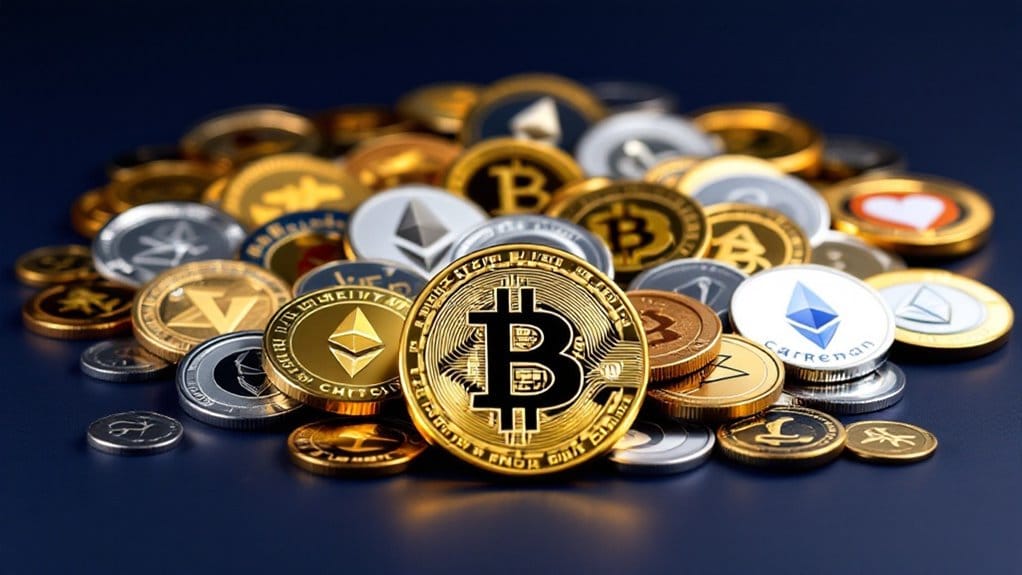

Cryptocurrencies have diversified because they serve fundamentally different purposes. Bitcoin and Litecoin function as digital cash, while Ethereum and Solana support applications and smart contracts. Stablecoins like Tether provide stability by pegging to traditional currencies. Specialized tokens like XRP address specific industry problems, and governance tokens grant voting rights on protocols. Each crypto type fills a unique market niche or solves a particular problem. The crypto ecosystem continues expanding as innovation breeds new specialized solutions.

Cryptocurrency’s explosive growth has transformed the digital landscape, creating a dizzying array of options beyond just Bitcoin. You’ve probably noticed the seemingly endless parade of digital currencies popping up everywhere—and there’s a method to this madness. These various cryptocurrencies actually serve different purposes in our increasingly digital economy.
Payment cryptocurrencies like Bitcoin and Litecoin function as digital cash, letting you send money directly to others without banks getting involved. They’re the OG crypto family members, focusing primarily on being, well, actual currency. Litecoin processes transactions faster than Bitcoin, while Monero offers privacy features for those who don’t want their financial business tracked.
The original crypto pioneers cut out the middleman, offering pure digital cash solutions with varying speeds and privacy levels.
Then there’s the utility token category, where Ethereum reigns supreme. Unlike Bitcoin, Ethereum isn’t just about payments—it’s a platform where developers build applications and execute smart contracts. Solana and Cardano operate similarly, offering platforms for building decentralized applications but with different technical approaches. The rise of these infrastructure cryptocurrencies has enabled an entire ecosystem of decentralized innovations beyond simple transactions.
Worried about volatility? Enter stablecoins. Tether and USD Coin are pegged to the dollar, making them less roller-coaster-like than their crypto cousins. Think of them as the bridge between traditional finance and crypto—they maintain steady value while offering digital benefits.
Some cryptocurrencies focus on specific industries or problems. XRP aims to revolutionize cross-border payments for banks. Basic Attention Token rewards you for viewing ads and compensates content creators directly. Decentralized finance (DeFi) tokens like Uniswap and Aave power lending and trading platforms that operate without middlemen. Despite thousands of cryptocurrencies available today, they all share a foundation built upon consensus-based ledgers that ensure transaction integrity. Governance tokens provide users with voting rights on protocol changes, giving stakeholders a democratic say in how blockchain platforms evolve.
Even governments are getting involved with Central Bank Digital Currencies (CBDCs), combining traditional currency authority with blockchain technology. These aren’t speculative investments but digital versions of national currencies.
The cryptocurrency ecosystem continues expanding because different problems require different solutions. Each new coin or token typically addresses a specific use case, inefficiency, or opportunity—creating an increasingly specialized digital economy where Bitcoin is just the beginning.
Frequently Asked Questions
How Do I Safely Store My Cryptocurrency?
Cryptocurrency should be stored using hardware wallets for maximum security. These offline devices protect private keys from online threats. Software wallets offer convenience for smaller amounts. Always backup seed phrases and enable two-factor authentication when available.
Can Cryptocurrencies Be Regulated by Governments?
Governments can and do regulate cryptocurrencies through various agencies despite their decentralized nature. Regulatory approaches vary globally, from supportive frameworks in Singapore to near-complete bans in China, addressing concerns about financial crimes and market stability.
What Causes Cryptocurrency Price Volatility?
Cryptocurrency price volatility stems from limited liquidity, market sentiment, regulatory news, whale trades, technological developments, and macroeconomic factors. The speculative nature of the market and absence of thorough regulations further amplify price fluctuations.
How Do Cryptocurrency Taxes Work?
Cryptocurrency taxes function on property taxation principles. The IRS requires reporting capital gains or income from crypto transactions. Taxable events include trading, selling, and using cryptocurrency for purchases, with different rates for long-term versus short-term holdings.
Which Exchanges Are Most Secure for Trading Cryptocurrency?
The most secure cryptocurrency exchanges include Kraken and Gemini, which utilize cold storage, regulatory compliance, and regular security audits. Binance offers robust two-factor authentication, while Coinbase provides insurance coverage for digital assets.