
A cold wallet is a cryptocurrency storage device that keeps your private keys completely offline, safe from hackers and malware. Unlike hot wallets (online storage), cold wallets—typically hardware devices resembling USB drives or paper documents—protect your digital fortune by never connecting to the internet. You need one because crypto transactions are irreversible; once stolen, your funds are gone forever. For serious investors, this security far outweighs the minor inconvenience of offline access. The peace of mind alone makes the investment worthwhile.
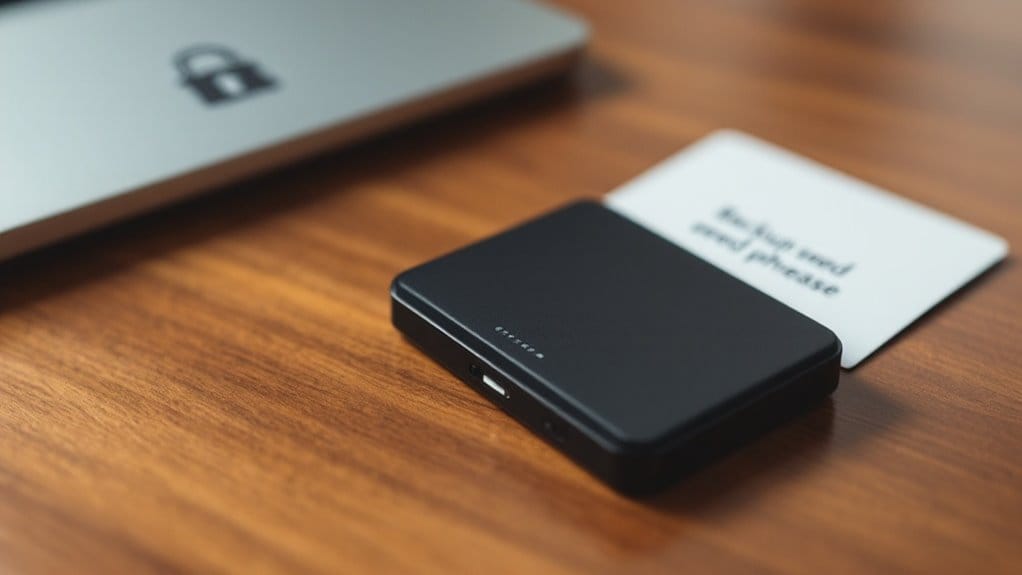
Nearly every cryptocurrency investor faces a significant choice at some point: keep their digital assets easily accessible but vulnerable, or secure them properly offline. This decision often leads to discovering cold wallets, the cryptocurrency equivalent of storing your money in a vault rather than carrying it all in your pocket.
The crypto dilemma: convenience with risk, or security with effort. Cold wallets aren’t a luxury—they’re a necessity.
A cold wallet is simply a storage solution that keeps cryptocurrency private keys completely offline, away from internet-connected devices and the hackers who lurk there. Unlike their “hot” counterparts (think mobile apps and exchange accounts), cold wallets exist in physical form—typically as hardware devices or even paper documents with printed keys.
Why does this matter? Because when your crypto is stored online, it’s vulnerable to attack. Period. One phishing email, one compromised exchange, one clever bit of malware, and poof—your digital fortune vanishes. Cold wallets eliminate this risk by never exposing your private keys to an internet connection. Unlike traditional banking systems, cryptocurrency transactions can’t be reversed, and there’s no institutional backing to recover your funds if they’re stolen.
Cold storage comes in several forms. Hardware wallets—small devices that look like USB drives—are the most popular option. Paper wallets, literally printed copies of your keys, offer another approach, though they’re becoming less common as hardware options improve. Some users opt for sound wallets where private keys are stored as audio files for increased durability.
Setting up a cold wallet requires some initial effort. You’ll generate private keys, create backups, and secure recovery seeds—those vital word phrases that can resurrect your wallet if the physical device is lost or damaged. When you initiate a transaction, your hardware wallet will verify and sign it while ensuring your private keys never leave the device. Yes, it’s a bit tedious. No, you shouldn’t skip any steps.
The tradeoff for this security is convenience. Moving assets from cold storage requires physical access to the device, making quick trades impossible. That’s exactly the point. Cold wallets aren’t designed for day traders but for serious investors protecting substantial holdings.
Consider this approach: keep small amounts for daily transactions in hot wallets while securing your crypto nest egg in cold storage. The peace of mind is worth the minor inconvenience—because nothing ruins your day quite like watching your hard-earned Bitcoin disappear into a hacker’s wallet.
Frequently Asked Questions
How Much Do Cold Wallets Typically Cost?
Cold wallets typically cost between $50-$250, varying by brand, security features, and functionality. Entry-level options like some Tangem models start under $50, while premium devices like Trezor Model T reach approximately $250.
Can Cold Wallets Be Hacked if Disconnected From the Internet?
While disconnected from the internet, cold wallets are highly secure against hacking attempts. However, physical theft, manufacturing flaws, and user negligence during setup or recovery seed management can still pose security risks.
What Happens if My Cold Wallet Is Physically Damaged?
If a cold wallet is physically damaged, funds remain accessible through backup seed phrases. Hardware wallets offer better protection than paper wallets, which can be permanently lost if damaged. Regular backups are essential for recovery.
Are Cold Wallets Necessary for Small Cryptocurrency Investments?
Cold wallets aren’t strictly necessary for small cryptocurrency investments, but they provide enhanced security for any amount. Investors must balance the upfront cost against long-term protection from online threats and exchange vulnerabilities.
How Often Should I Update My Cold Wallet’s Firmware?
Firmware updates for cold wallets should be applied when released by manufacturers, typically every few months. Users should prioritize security-related updates immediately, while feature enhancements can be installed during regular maintenance checks of their devices.