A crypto wallet isn’t actually storing your coins—it’s safeguarding your private keys to access them on the blockchain. Think of it as your digital passport to cryptocurrency land. Hot wallets stay connected online (convenient but riskier), while cold wallets remain offline (safer but less accessible). You’ll need to protect your recovery phrase—lose that, and kiss your crypto goodbye. No customer service agent can help you there! The journey from setup to transaction is simpler than you might expect.
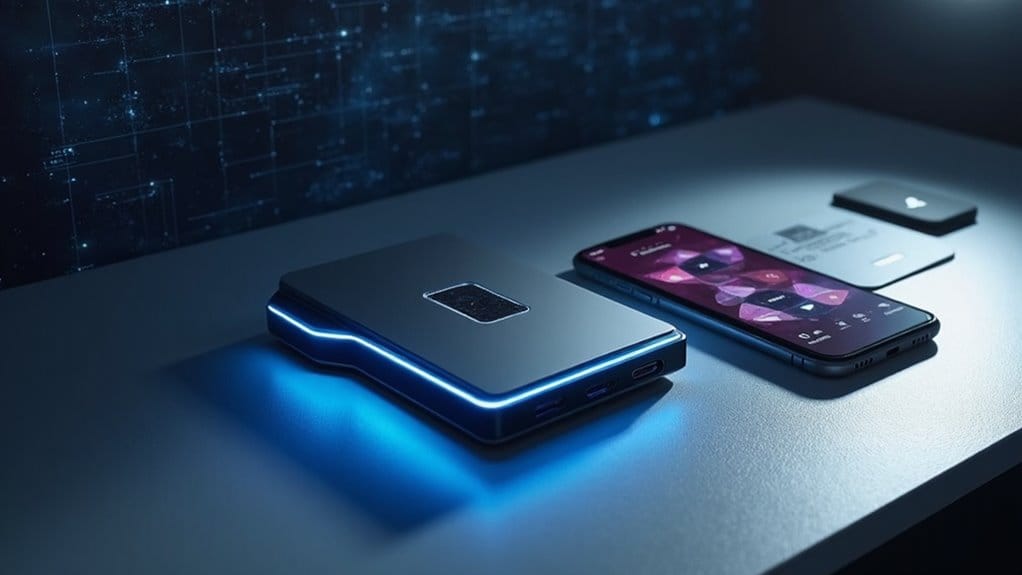
While the crypto world might seem like a maze of jargon and technical complexity, crypto wallets serve as your crucial gateway to this digital frontier. Unlike traditional wallets stuffed with cash, crypto wallets don’t actually hold your Bitcoin or Ethereum. Surprise! They store something far more valuable—private keys that grant access to your cryptocurrency on the blockchain. Think of them as your digital passport to the crypto ecosystem.
Crypto wallets come in two main flavors: hot and cold. Hot wallets maintain constant internet connections (convenient but riskier), including mobile apps and web-based options you access through browsers. Cold wallets, meanwhile, stay offline like technological hermits—making them considerably more secure against hackers who, let’s face it, would love nothing more than to drain your digital fortune. Most modern wallets utilize a Hierarchical Deterministic structure that allows users to manage multiple accounts from a single seed phrase. Popular noncustodial options like MetaMask and Trust Wallet give you full control of private keys rather than relying on third-party custody.
The technology behind these wallets isn’t magic—it’s cryptography. Each wallet generates a public-private key pair. Your public key creates your wallet address (share this freely!), while your private key signs transactions (guard this with your life!). Lose your private key, and you’ve fundamentally thrown your crypto into a digital abyss. No customer service hotline can help you there.
When making a transaction, your wallet creates a proposal, you confirm it, and your private key digitally signs it. The signed transaction then travels across the blockchain network for validation before being permanently recorded. The whole process takes minutes—not bad for a system replacing centuries-old banking infrastructure.
Setting up a wallet requires downloading software or purchasing a hardware device, creating strong passwords, and—crucially—securely backing up your recovery phrase. This seed phrase, typically 12-24 random words, can restore access to your funds if disaster strikes. Write it down, store it safely, and never, ever share it online. Understanding the security differences between hot and cold wallets is essential for determining which solution best fits your specific cryptocurrency management needs.
Your future self will thank you when that crypto investment finally moons, and you actually have access to cash out.
Frequently Asked Questions
How Do I Recover a Lost or Forgotten Crypto Wallet Password?
Users can recover lost crypto wallet passwords through seed phrase recovery, third-party recovery tools, built-in wallet recovery features, or hardware wallet recovery options. Preventative measures include secure storage of recovery phrases and regular backups.
Can Crypto Wallets Be Hacked or Compromised?
Crypto wallets can indeed be compromised through various attack vectors including malware, phishing scams, social engineering tactics, and API vulnerabilities. Both hot wallets (connected to the internet) face greater risks than cold, offline storage options.
Are Hardware Wallets Worth the Investment for Small Portfolios?
Hardware wallets offer enhanced security for small portfolios, though cost considerations exist. They’re most valuable for long-term holders prioritizing protection over convenience, while software wallets remain adequate for minimal, short-term investments.
How Do Taxes Work for Cryptocurrency Stored in Wallets?
Cryptocurrency stored in wallets isn’t taxable until sold, traded, or used for purchases. These actions trigger capital gains tax calculations based on the difference between acquisition cost and disposal value.
Can I Transfer Crypto Between Different Types of Wallets?
Transferring cryptocurrencies between different wallet types is generally possible. Users can move assets between hot, cold, hardware, software, and web wallets as long as both wallets support the specific cryptocurrency being transferred.