
To use Bitcoin, first create a digital wallet—either a hot wallet (online) or cold storage (offline). Next, purchase Bitcoin through exchanges like Coinbase or invest in Bitcoin ETFs. Sending Bitcoin requires entering the recipient’s wallet address and confirming transaction fees. Always double-check addresses; transactions are irreversible. Protect your private keys religiously—lose them, lose your Bitcoin forever. Scam-proof yourself by remembering: if it sounds too good to be true, it probably is. The journey from Bitcoin basics to crypto mastery awaits.
Diving into the world of Bitcoin doesn’t require a computer science degree or insider connections—just a bit of knowledge and caution. This decentralized digital currency operates independently of banks and governments, allowing users to make transactions directly with each other through a public ledger called the blockchain. Think of Bitcoin as digital money that exists solely online but holds real-world value.
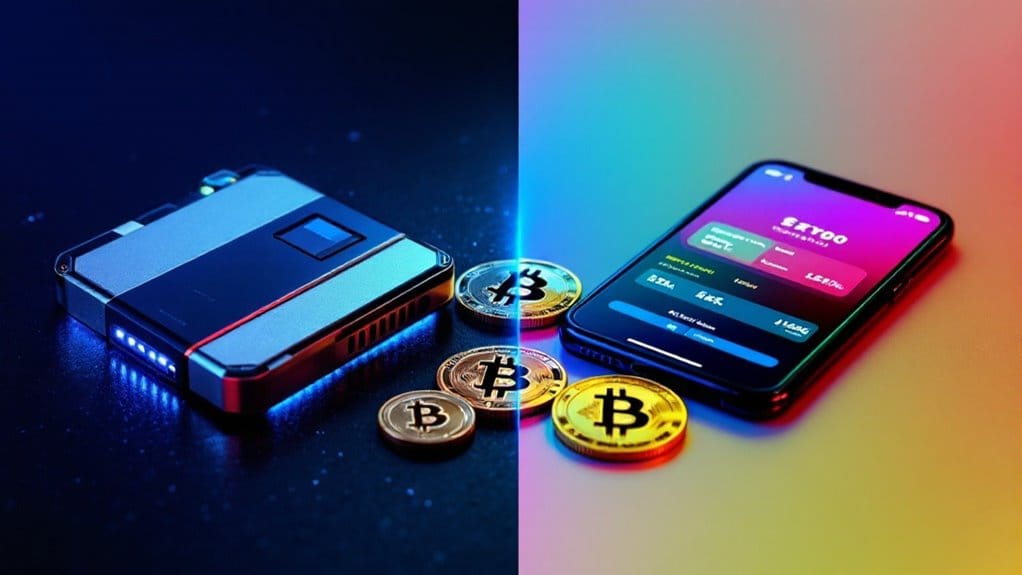
To get started with Bitcoin, you’ll need a digital wallet—software that stores your crypto securely. Choose between “hot wallets” (connected to the internet) for convenience or “cold storage” (offline) for maximum security. Guard your private keys and recovery phrases with your life! Seriously, lose these and kiss your Bitcoin goodbye forever.
Your Bitcoin wallet isn’t just an app—it’s your digital vault. Protect those keys like the crown jewels.
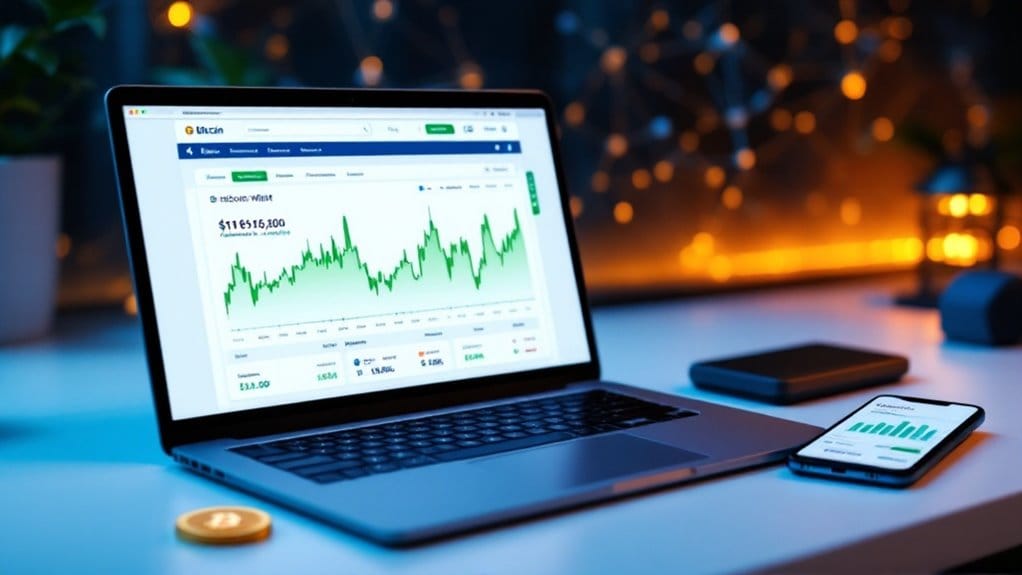
Acquiring Bitcoin happens through several channels. Buy it on cryptocurrency exchanges like Coinbase or Binance using traditional money, invest in Bitcoin ETFs for a regulated approach, or—if you’re technically inclined and have cheap electricity—try mining it yourself. Before selecting an exchange, make sure to thoroughly research different platforms to find one with reasonable fees and strong security measures. Mining requires solving complex mathematical problems with powerful computers, rewarding successful miners with fresh Bitcoin.
Once you’ve obtained Bitcoin, sending it is surprisingly simple. Enter the recipient’s wallet address (that long string of characters), specify the amount, confirm the transaction fee, and hit send. The network validates your transaction, and voilà—payment delivered within minutes, regardless of whether your recipient lives next door or across the globe.
Remember, Bitcoin transactions are irreversible. Double-check addresses before sending! The network’s security comes from blockchain technology and cryptography, making transactions secure—but human error remains the biggest vulnerability. Understanding the basics of digital signatures ensures you can verify transaction authenticity when using Bitcoin.
Some businesses now accept Bitcoin for purchases, though adoption varies widely. For many, Bitcoin serves as an investment vehicle rather than everyday currency. International remittances represent a powerful use case where Bitcoin offers lower fees compared to traditional banking services for large cross-border transfers.
Watch for scams—if an opportunity sounds too good to be true, it probably is. Bitcoin might be revolutionary, but the old rules of caution still apply in this brave new financial world.
Frequently Asked Questions
Is Bitcoin Legal in My Country?
The legality of Bitcoin varies globally, with 119 countries allowing its use. Without knowing the specific country in question, it’s impossible to determine if Bitcoin is legal in the inquirer’s nation.
How Do I Report Bitcoin on My Taxes?
Individuals report Bitcoin on taxes by documenting transactions on Form 8949 and Schedule D for capital gains/losses. Income from mining or earnings is reported on Schedule 1. Detailed transaction records are essential for accurate reporting.
What Happens if I Lose My Wallet Password?
Losing a Bitcoin wallet password results in permanent loss of funds for non-custodial wallets without recovery phrases. Users cannot recover Bitcoin without the password or seed phrase, as there’s no central authority for assistance.
Can Bitcoin Transactions Be Traced Back to Me?
Bitcoin transactions are pseudonymous, not anonymous. While linked to wallet addresses rather than names, advanced forensic tools can trace patterns and potentially connect transactions to individuals, especially when using regulated exchanges or revealing identifying information.
How Does Bitcoin Mining Affect the Environment?
Bitcoin mining consumes substantial electricity, equivalent to entire countries’ usage. It contributes considerably to carbon emissions, water consumption, and electronic waste. While primarily reliant on fossil fuels, renewable energy integration offers potential environmental impact reduction.