Polygon (formerly Matic) supercharges Ethereum by processing transactions off-chain, slashing fees and boosting speeds from minutes to seconds. It’s the Layer 2 solution your wallet has been begging for. MATIC, its native token, handles transaction costs, staking, and governance—soon to upgrade to POL in September 2024. With developer tools like zkEVM and specialized sidechains, Polygon balances security and efficiency where Ethereum struggles. Discover why millions trust this scalable sidekick for daily crypto use.
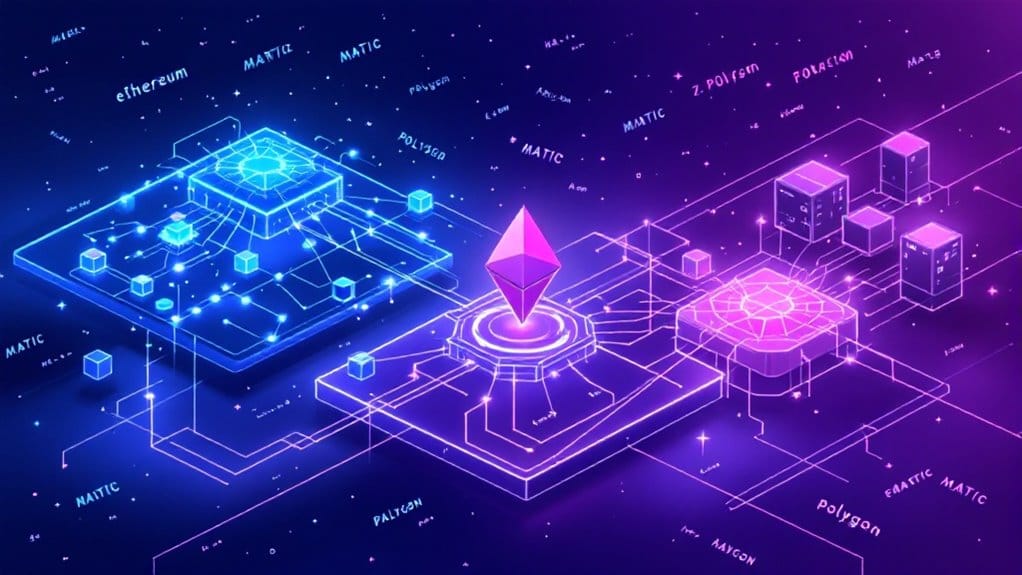
In the fast-paced world of cryptocurrency, Polygon stands as a knight in shining armor for Ethereum users fed up with slow transactions and sky-high fees. Originally launched as Matic Network before its 2021 rebrand, Polygon operates as a Layer 2 scaling solution that runs parallel to Ethereum, dramatically reducing those pesky gas fees that make everyday users cringe.
How does it work? Think of Polygon as Ethereum’s efficient assistant. It processes transactions off the Ethereum main chain (where congestion happens), bundles them up, and then submits the final results back to Ethereum. This clever approach maintains Ethereum’s legendary security while supercharging its speed and slashing costs. Your wallet will thank you.
Polygon handles Ethereum’s heavy lifting off-chain, delivering blazing speed and microscopic fees while preserving bulletproof security.
The native token, MATIC, powers the entire ecosystem. You’ll need it to pay for transactions (just like ETH on Ethereum), stake for network security, or vote on governance proposals. The platform has implemented its version of EIP-1559 to burn transaction fees, potentially making MATIC deflationary with increased adoption. Savvy investors should note that MATIC is scheduled for an upgrade to POL on September 4, 2024 – mark your calendars!
Polygon employs a Proof-of-Stake consensus mechanism, which is far less energy-hungry than older blockchain models. Don’t want to run a validator node? No problem! You can delegate your MATIC to trusted validators and still earn rewards without the technical headaches. The platform was founded in 2017 by three cryptocurrency members from India who sought to address Ethereum’s scaling challenges.
Beyond its flagship PoS Chain, Polygon’s toolkit includes zkEVM, zk-Rollups, and the Polygon CDK for developers wanting to build custom blockchains. This flexibility has attracted everything from DeFi applications to NFT marketplaces and blockchain games to its ecosystem. The platform’s architecture features a network of specialized sidechains that effectively reduce congestion on the main Ethereum blockchain while preserving its security benefits.
What makes Polygon truly shine is its practical balance of security, speed, and cost. Transactions that might cost $50 on Ethereum often execute for pennies on Polygon, and in seconds rather than minutes. For everyday crypto users who can’t afford to bleed money on gas fees, Polygon isn’t just nice to have – it’s essential infrastructure in the evolving blockchain landscape.
Frequently Asked Questions
How Does Polygon Compare to Other Layer 2 Scaling Solutions?
Polygon offers superior scalability compared to other Layer 2 solutions through its multi-chain support, lower transaction costs, ZK Rollups implementation, and broader ecosystem with over 350 dApps and robust interoperability features.
What Security Risks Should Investors Be Aware of With MATIC?
Investors should be aware of smart contract vulnerabilities, regulatory risks including SEC allegations, potential centralization due to limited validators, and network fragmentation. Regular audits and compliance measures help mitigate these security concerns.
Can Polygon Operate Independently if Ethereum Fails?
Polygon can theoretically operate independently with its own blockchain, but its value proposition and ecosystem are heavily tied to Ethereum. A significant Ethereum failure would likely severely impact Polygon’s utility and adoption.
How Will ETH 2.0 Affect Polygon’s Relevance and Value?
Ethereum 2.0 presents a dual impact for Polygon: potentially reducing its scaling utility while creating opportunities for its evolution beyond Layer 2. Polygon’s value increasingly depends on its multichain capabilities rather than Ethereum dependency.
What Partnerships Are Driving Polygon’s Real-World Adoption?
Polygon’s real-world adoption is driven by diverse partnerships across industries, including Ernst & Young, Google Cloud, Nike, Starbucks, and Mercedes-Benz, enabling enterprise solutions, NFT marketplaces, loyalty programs, and data-sharing platforms.