Getting a Bitcoin wallet is simpler than you think. First, decide between hardware wallets (most secure), software wallets (good balance), or web wallets (convenient but less secure). Download only from official sources—scammers lurk everywhere. Set up your wallet by creating a strong password and backing up your seed phrase immediately. Never share this phrase with anyone, ever. Enable two-factor authentication for extra protection. The journey to financial sovereignty continues with these foundational steps.
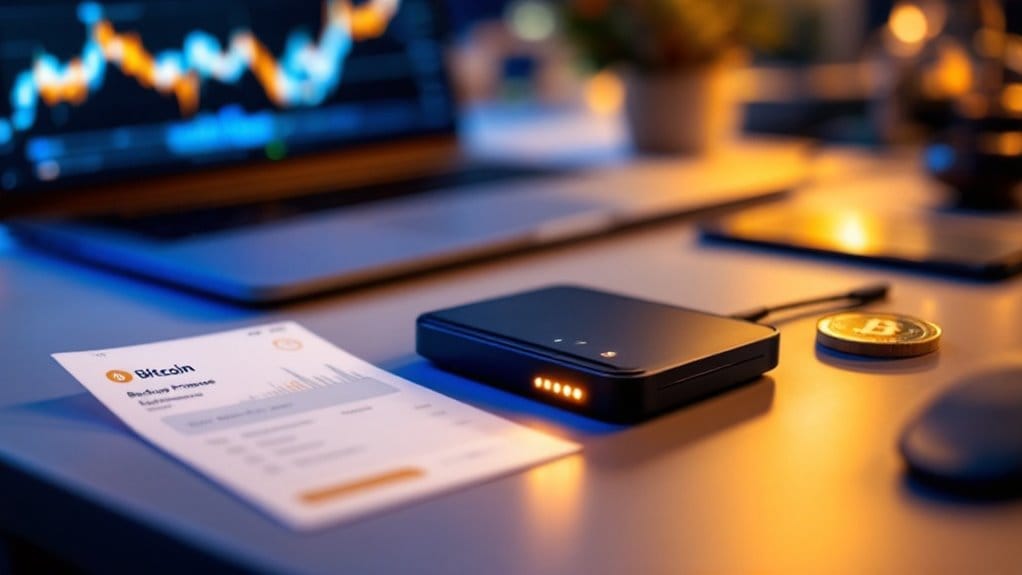
While the world of cryptocurrency might seem intimidating at first glance, getting started with a Bitcoin wallet is surprisingly straightforward. Think of a Bitcoin wallet as your personal gateway to the crypto universe – not an actual wallet holding digital coins, but rather a tool that stores the private keys needed to access your Bitcoin. Choosing the right wallet is your first significant step into this brave new financial world.
Bitcoin wallets come in several flavors, each with distinct trade-offs between security and convenience. Hardware wallets like Ledger and Trezor offer bank-vault level security by keeping your private keys offline – perfect for the paranoid or those with substantial holdings. Software wallets provide a nice middle ground, available for your desktop or smartphone. Web wallets? Convenient, sure, but remember: if you don’t control your keys, you don’t control your coins.
Setting up your wallet isn’t rocket science. First, choose a wallet type that matches your needs. Security-obsessed? Go hardware. Casual user? A mobile app might suffice. Once you’ve decided, download from official sources only – this isn’t the time to get creative with random websites.
Initialize your wallet, and for the love of financial security, back up your seed phrase! These 12-24 words are your financial lifeline if things go sideways.
Protect your digital gold with proper security measures. Use strong passwords (and no, “Bitcoin123” doesn’t count), enable two-factor authentication, and keep your software updated. Consider using a VPN for encryption when making transactions to add an extra layer of protection. Be vigilant about phishing scams – legitimate wallet providers will never randomly ask for your seed phrase. Popular wallets like Kraken Pro offer advanced trading tools for those looking to actively manage their cryptocurrency investments. Understanding the distinction between hot and cold wallets is essential for balancing accessibility with security in your Bitcoin journey.
Popular options for beginners include user-friendly Exodus, security-focused Electrum, or BlueWallet for mobile users. The beauty of Bitcoin wallets is the control they provide – no bank approval needed, no freezing of assets, just financial sovereignty in digital form.
Financial freedom in digital form—no banks, no permissions, just you and your Bitcoin.
Remember though, this freedom comes with responsibility. One wrong move – a lost key, a phishing scam, or sending to the wrong address – and your Bitcoin could vanish forever.
Frequently Asked Questions
What Are the Tax Implications of Using Bitcoin?
Bitcoin use triggers capital gains tax when sold, traded, or used for purchases. Receiving it as income is taxed as ordinary income. Proper reporting is mandatory, with penalties for non-compliance.
How Do I Recover My Wallet if I Lose My Credentials?
Users can recover lost Bitcoin wallets using seed phrases, private keys, or backup files. Hardware wallet owners can restore access with seed phrases on replacement devices. Professional recovery services exist for when other methods fail.
Can My Bitcoin Wallet Be Hacked?
Bitcoin wallets can be hacked through malware, phishing, or private key theft. Risk varies by wallet type, with hardware wallets being most secure. Two-factor authentication and offline storage considerably reduce vulnerability to attacks.
What Fees Are Associated With Bitcoin Transactions?
Bitcoin transactions incur fees paid to miners based on transaction size and network congestion. Fees typically range from $0.50 to $2.50 but can increase during high demand periods. Additional costs include exchange and wallet fees.
Is My Bitcoin Wallet Insured Against Loss or Theft?
Bitcoin wallets typically aren’t automatically insured. Most exchanges offer limited coverage for custodial wallets. Self-custody solutions generally have no insurance. Specialized crypto insurance is emerging through providers like Boost for qualified custodians.