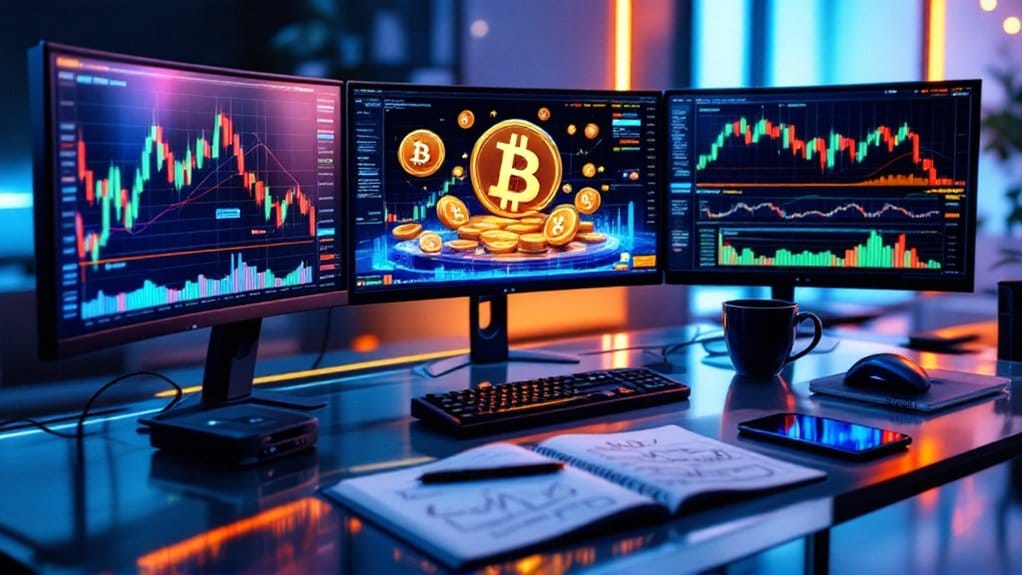
Buying Bitcoin isn’t rocket science. First, choose an exchange (Coinbase or Binance for newbies, DEXs for tech-savvy folks). Set up an account with proper ID verification and enable two-factor authentication—don’t skimp on security! Fund your account via bank transfer (cheaper) or card (faster), then place your order. Remember, you can buy fractions of Bitcoin, not just whole coins. For serious investors, get a hardware wallet—exchanges aren’t fortresses. The journey to crypto mastery has just begun.
While cryptocurrency has become a mainstream investment option, many potential investors remain puzzled about how to actually buy Bitcoin. The process isn’t as complicated as it might seem, though it does require careful consideration of several factors before diving in.
First, investors need to choose between centralized exchanges (CEX) like Coinbase, Binance, and Kraken or decentralized exchanges (DEX). CEXs offer user-friendly interfaces and require ID verification—perfect for beginners who don’t mind sharing personal information. DEXs provide more privacy but can be trickier to navigate. Choose wisely; your comfort with technology should guide this decision.
Setting up an account requires basic personal information and valid government ID to satisfy those pesky KYC requirements. Don’t roll your eyes—these rules prevent money laundering and other shady business. Create a password that would make a hacker weep, and always enable two-factor authentication. Seriously, do it now.
Ready to fund your account? Bank transfers typically offer the lowest fees, though they’re not exactly speedy. Debit cards provide quicker access but cost more. Credit cards? Proceed with extreme caution—the interest rates could eat your potential profits faster than a bear market. Some platforms also accept PayPal, Google Pay, or Apple Pay. Always check if your bank permits crypto purchases as some institutions may block these transactions without prior notification.
When placing orders, decide between market orders (immediate purchase at current price) or limit orders (purchase when Bitcoin hits your target price). Remember, you don’t need to buy whole Bitcoins—fractional purchasing lets you start with as little as $5. Always adhere to the golden rule of never investing money you cannot afford to lose.
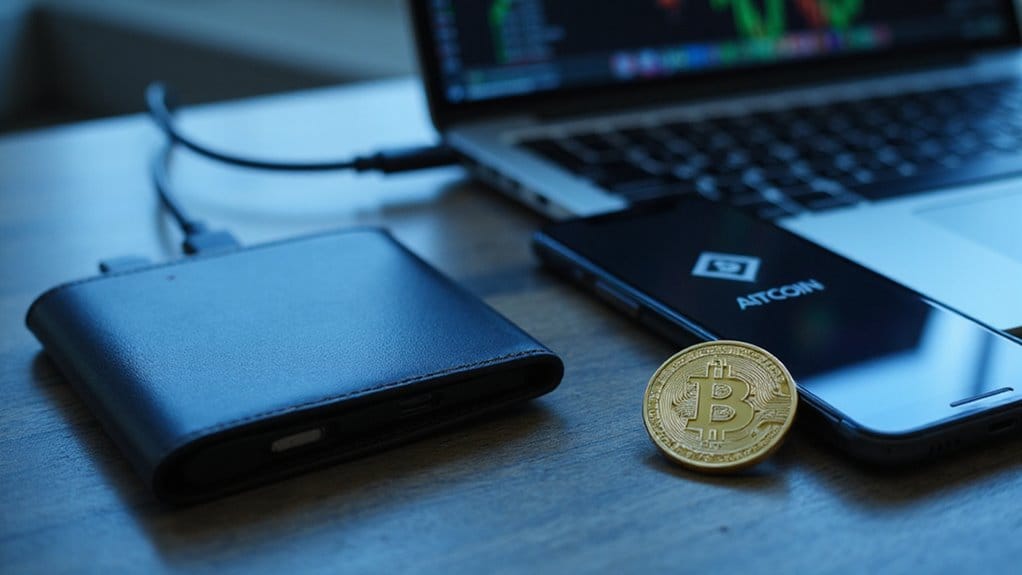
After buying, consider where to store your digital gold. Exchange wallets are convenient but vulnerable. Hardware wallets provide maximum security for serious investors, while software wallets balance accessibility with decent protection. Before transferring your Bitcoin, be sure to set up proper security features including a recovery phrase which is essential for regaining access if you lose your device or forget your password. Never, ever forget your private keys or recovery phrases—there’s no “forgot password” button in crypto.
Starting small is smart. The crypto world can be volatile, so test the waters before making substantial investments. With careful planning and security measures, buying Bitcoin can be a straightforward process for even the most hesitant beginners.
Frequently Asked Questions
Is Bitcoin Legal in My Country?
The legal status of Bitcoin varies globally across 111+ countries. Without knowing your specific location, it’s impossible to give a definitive answer.
Most Western nations like the US, Canada, and EU countries permit Bitcoin trading, though with varying tax obligations.
Meanwhile, about 22 countries have banned cryptocurrencies entirely, including China and Egypt.
Check your local financial regulatory authority’s website or consult a legal professional familiar with cryptocurrency laws in your region.
How Do I Keep My Bitcoin Secure From Hackers?
Keeping Bitcoin secure requires multiple layers of defense. Hackers can’t steal what they can’t access.
Use hardware wallets like Ledger or Trezor—they’re digital fortresses for your crypto. Enable two-factor authentication everywhere, no exceptions.
Backup your recovery phrases on paper (not digitally), and store them in different physical locations. Never, ever share private keys online or via text.
Regular software updates aren’t optional—they’re your digital immune system against evolving threats.
What Tax Implications Come With Buying Bitcoin?
Purchasing Bitcoin isn’t taxable, but everything after becomes a tax event.
When you sell, trade, or spend Bitcoin, you’ll face capital gains taxes based on how long you held it and your profit margin.
Hold it over a year for lower long-term rates (0-20%), less than a year means higher short-term rates (up to 37%).
The IRS classifies crypto as property, not currency.
Keep meticulous records of every transaction—the taxman cometh whether you’re ready or not.
Can I Cancel a Bitcoin Transaction After Sending It?
Once a Bitcoin transaction is confirmed on the blockchain, it’s permanent—no “oops” button exists.
However, unconfirmed transactions might be cancelable through Replace-By-Fee (RBF) if your wallet supports it. Simply create a new transaction with a higher fee that sends the funds back to yourself.
Not all wallets offer this feature, though, and success isn’t guaranteed.
Your best protection? Double-check everything before hitting send. Prevention beats scrambling for solutions every time.
What Happens to My Bitcoin if the Exchange Goes Bankrupt?
When an exchange goes bankrupt, your Bitcoin typically becomes part of the bankruptcy estate.
You’re now an unsecured creditor, joining the back of a very long repayment line. Courts freeze assets during proceedings, which can drag on for years.
You might eventually get some money back—but often pennies on the dollar, and probably not in crypto.
This is why the golden rule exists: “Not your keys, not your coins.”
Keep Bitcoin in your own wallet whenever possible.