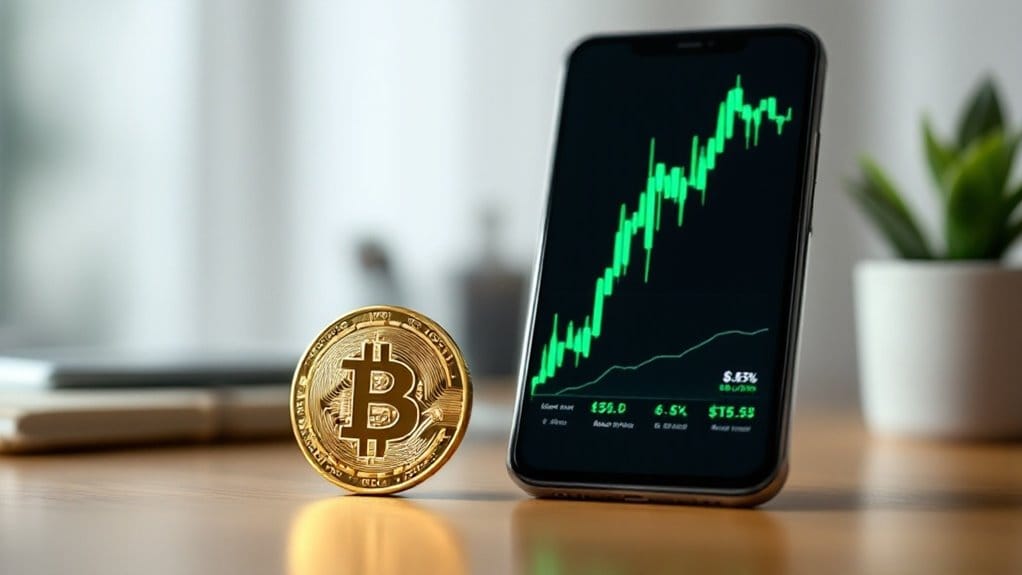

In crypto, “green” signals upward price movements driven by buy pressure exceeding sell pressure. These upticks result from positive market sentiment, FOMO, or favorable regulatory news. Technical analysts spot green candles on charts to identify bullish trends and potential entry points. Remember, green runs are fueled by speculation and sentiment—not always fundamentals. Watch for influencer pumps, adoption announcements, and tokenomic events that trigger buying frenzies. The deeper patterns behind these green movements reveal profitable opportunities for prepared traders.

While traditional markets follow relatively predictable patterns, cryptocurrency prices dance to a wildly different rhythm. You’ve probably watched your portfolio flash red then green in a single day, wondering what invisible hand is yanking these digital assets around. It’s not magic—it’s market dynamics on steroids.
Supply and demand rule the crypto kingdom, just like everywhere else. When buyers outnumber sellers, prices climb. Simple, right? Except in crypto, these forces operate at hyperspeed. Speculation drives much of this market—people aren’t buying because they need Bitcoin today; they’re betting on tomorrow’s value.
Speculation isn’t just a market feature in crypto—it’s the engine, with investors betting on future value rather than current utility.
Market sentiment acts like rocket fuel for price movements. The Fear and Greed Index isn’t just a cute tool; it’s a window into the collective psychology driving your gains or losses. When fear grips the market, panic selling can send prices spiraling. Conversely, nothing propels prices quite like FOMO—that nagging feeling you’re missing the next big thing. Many investors enthusiastically declare assets are heading to the moon when they believe a dramatic price increase is imminent.
Tokenomics—the economic design behind cryptocurrencies—shapes long-term price trajectories. Bitcoin’s halving events slash new supply entering the market, creating scarcity that historically precedes bull runs. Similarly, Ethereum’s burn protocols remove tokens from circulation, potentially supporting higher valuations.
Regulatory announcements can send shockwaves through the market in seconds. A single SEC decision or international policy shift can trigger mass sell-offs or buying frenzies. Watch those headlines.
Technical analysts pore over charts seeking patterns in the chaos. While no crystal ball exists, these historical patterns often repeat themselves with eerie similarity. Learn to spot support and resistance levels—they’re like guardrails for price movements.
Adoption remains the ultimate price driver. More users, more utility, more demand. When major companies integrate crypto or develop new use cases, they’re not just making headlines—they’re expanding the potential value of the entire ecosystem. With Bitcoin being the most liquid cryptocurrency, investors can enter and exit positions more easily than with smaller-cap alternatives. Social media influencers like Elon Musk can dramatically affect prices through key opinion leadership, especially for meme coins like Dogecoin.
Pay attention to these factors, and you’ll start seeing method in the madness. The crypto market isn’t random; it’s just operating at a complexity and speed that makes traditional finance look like it’s moving in slow motion.
Frequently Asked Questions
How Do Environmental Concerns Impact Cryptocurrency Prices?
Environmental concerns impact cryptocurrency prices through increased regulatory pressures, shifting investor sentiment, operational cost changes from energy market fluctuations, and market preference for sustainable alternatives like Proof-of-Stake cryptocurrencies over energy-intensive models.
Can Green Crypto Initiatives Provide Long-Term Investment Stability?
Green crypto initiatives offer potential long-term stability through reduced regulatory risks, alignment with growing ESG investment trends, and lower operational costs. However, their performance remains tied to broader market dynamics and adoption rates.
What Regulatory Changes Might Affect Sustainable Blockchain Projects?
Regulatory changes affecting sustainable blockchain projects may include clearer definitions of digital assets, technology-neutral frameworks, risk-based approaches, and global cooperation. These shifts could both enable innovation and guarantee appropriate oversight of environmental applications.
How Do Carbon Credits Integrate With Cryptocurrency Ecosystems?
Carbon credits integrate with cryptocurrency ecosystems through tokenization protocols like Toucan and KlimaDAO, which convert credits into blockchain-based tokens that can be traded, used as collateral, or incorporated into DeFi applications.
Are Energy-Efficient Consensus Mechanisms More Profitable for Investors?
Energy-efficient consensus mechanisms can offer higher profitability through reduced operational costs, better regulatory positioning, and growing investor preference for sustainable technologies. However, profitability ultimately depends on market adoption and overall network value.