

“To the moon” is crypto’s rallying cry for explosive price growth, born in internet memes and popularized during Bitcoin’s 2017 bull run. It’s shorthand for astronomical gains that attract FOMO-driven investors. When Elon Musk tweets or new tech breaks through, prices can skyrocket overnight. But beware—most moonshots crash back to Earth in brutal corrections. Those rocket emojis might signal genuine potential or just another pump-and-dump scheme. The difference could cost you everything.
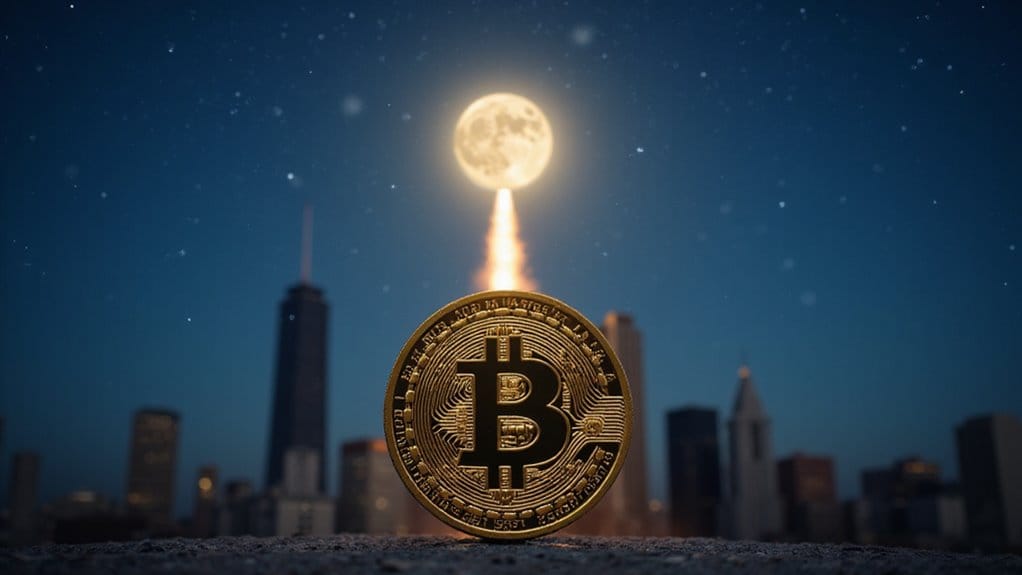
While traditional investors monitor P/E ratios and quarterly earnings, crypto enthusiasts rally behind a simpler battle cry: “to the moon.” This ubiquitous phrase—often punctuated with rocket emojis—has become the unofficial mantra of cryptocurrency believers worldwide. Born in the depths of internet memes and popularized through cryptocurrency subreddits and 4chan, this rallying cry gained mainstream recognition during Bitcoin’s legendary 2017 bull run when prices soared from $1,000 to nearly $20,000.
The phrase isn’t just casual jargon—it’s cultural shorthand for explosive price growth. When investors declare a coin is “mooning,” they’re celebrating rapid value increases that defy gravity, much like Ethereum’s 2021 surge from under $1,000 to approximately $5,000. These dramatic price jumps, known as “moonshots,” represent the dream scenario for crypto holders. The term has become particularly associated with speculative trading behavior in cryptocurrency markets.
What drives these astronomical price movements? A potent cocktail of market sentiment, celebrity endorsements, and good old-fashioned FOMO (fear of missing out). When influencers like Elon Musk tweet support for coins like Dogecoin, prices can skyrocket overnight. The DOGE-1 mission—literally planning to send a satellite to the moon funded by Dogecoin—perfectly embodied this sentiment in both metaphor and reality.
Market dynamics also play a vital role. Scarcity combined with surging demand creates perfect conditions for a moonshot, while technological breakthroughs and institutional adoption can legitimize previously speculative assets. Don’t underestimate the power of a compelling narrative—stories sell tokens as effectively as actual utility. As of March 2025, the market includes over 25,000 cryptocurrencies competing for investor attention and capital.
Remember, though: what goes up must come down. These speculative frenzies often lead to brutal corrections. The phrase is commonly used by bullish investors to encourage others to invest in certain cryptocurrencies they believe will rise dramatically in value. The most spectacular moonshots frequently result from deliberate pump-and-dump schemes or unsustainable hype cycles. Smart investors maintain diversified portfolios rather than betting everything on potential moonshots.
The next time you see “to the moon! 🚀🌕” flooding your timeline, understand it represents more than optimism—it encapsulates crypto’s volatility, community dynamics, and speculative fervor in three simple words. Just don’t mortgage your house based on rocket emojis alone.
Frequently Asked Questions
How Do Crypto Market Cycles Impact “To the Moon” Predictions?
Crypto market cycles directly influence “to the moon” predictions, with such optimistic forecasts typically emerging during growth phases, fueled by FOMO, technological advances, and post-halving momentum, but often challenged during correction phases.
Can Technical Analysis Predict When Cryptocurrencies Will Moon?
Technical analysis can identify potential conditions for significant price increases but cannot reliably predict “moonshots.” It provides probability-based insights through pattern recognition, though cryptocurrency volatility and unpredictable external factors limit its predictive accuracy.
What Alternative Phrases Do Serious Investors Use Instead?
Professional investors typically use terminology like “significant price increase,” “bull run anticipation,” “market boom,” “price surge,” and “investment uptrend” rather than colloquial expressions when discussing substantial cryptocurrency value appreciation potential.
How Do Whale Movements Influence Potential Moonshots?
Whale movements considerably influence potential moonshots through market liquidity manipulation, price volatility, and signaling effects. When large holders accumulate or dump assets, their actions can trigger cascading market reactions affecting smaller cryptocurrencies dramatically.
Are Moon Predictions More Common During Specific Market Conditions?
Moon predictions typically surge during bull markets, halving events, and periods of macroeconomic uncertainty. They become more frequent when overall market sentiment is positive and trading volumes increase across cryptocurrency exchanges.