
Cryptocurrency exchanges are digital marketplaces where you can buy, sell, and trade crypto assets. They come in two flavors: centralized exchanges (CEXs) that work like traditional banks, holding your assets for you, and decentralized exchanges (DEXs) that connect buyers and sellers directly through smart contracts. Choose wisely—security features, trading pairs, and fee structures matter! Always enable two-factor authentication, never share private keys, and research local regulations before diving in. Your financial future might depend on what you learn next.
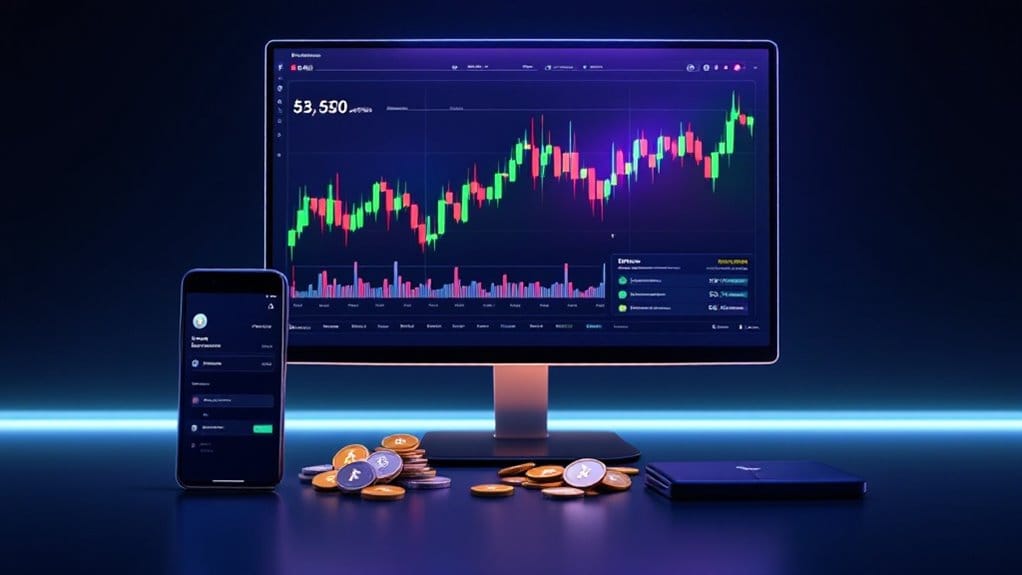
As the digital asset ecosystem continues to evolve, cryptocurrency exchanges have emerged as the critical gateways between traditional finance and the blockchain frontier. These platforms serve as marketplaces where users can buy, sell, and trade various digital assets—from Bitcoin to the latest altcoins. Don’t confuse them with actual cryptocurrencies; exchanges are just the meeting places where the magic happens.
Cryptocurrency exchanges come in several flavors. Centralized exchanges (CEXs) work like traditional financial institutions—they hold your funds, match your trades, and yes, charge fees for the privilege. Decentralized exchanges (DEXs), on the other hand, cut out the middleman entirely, letting you trade directly with others through smart contracts. Think of CEXs as shopping malls with security guards, while DEXs are more like farmer’s markets where you deal directly with vendors. Centralized exchanges often provide custodial services by storing users’ cryptocurrencies in exchange-controlled wallets, requiring trust in their security measures.
The crypto exchange landscape offers two paths: the guarded structure of CEXs or the peer-to-peer freedom of DEXs.
When you’re browsing an exchange, you’ll encounter trading pairs (BTC/USD, ETH/BTC), order books showing buy and sell requests, and different order types. Want to buy immediately? Use a market order. Have a specific price in mind? That’s a limit order. The interface might look intimidating at first, but most exchanges design for newcomers—they want your business, after all.
Security is paramount in this wild west of finance. Good exchanges employ air-gapped devices, hardware security modules, and multi-party computation wallets. But remember: no exchange is immune to threats. Phishing attacks, malware, and even insider threats lurk around every corner. Always enable two-factor authentication, and never, ever share your private keys!
Regulations have tightened considerably. Expect to verify your identity through KYC procedures before trading significant amounts. This might seem intrusive, but it’s protecting the ecosystem from money laundering and fraud. Different countries have different rules, so check what applies to you. Recent industry developments have shown the importance of implementing real-time on-chain monitoring to ensure compliance with security policies and detect potentially fraudulent activities.
Choose your exchange wisely. Consider factors like security measures, available trading pairs, liquidity, and fee structures. Most exchanges provide customer support options to help you navigate their platforms and resolve issues that may arise. Your digital assets deserve a secure home—don’t settle for less.
Frequently Asked Questions
How Are Cryptocurrency Exchanges Regulated in Different Countries?
Cryptocurrency exchange regulations vary widely globally. Japan recognizes them legally, the EU enforces extensive MiCA rules, China bans them completely, while countries like Brazil, South Korea, and Australia implement specific oversight frameworks.
What Security Measures Should I Look for in an Exchange?
Security-conscious users should prioritize exchanges with 2FA, cold storage practices, regulatory compliance, KYC procedures, withdrawal whitelisting, IP restrictions, and insurance coverage. Established reputation and transparent security audits further indicate trustworthiness.
Can I Use Exchanges to Convert Crypto to Traditional Currency?
Yes, users can convert cryptocurrency to traditional currency through exchanges. Most platforms offer fiat conversion services, allowing traders to exchange their digital assets for currencies like USD, EUR, or GBP.
How Do Exchange Fees Compare Between Different Platforms?
Exchange fees vary considerably between platforms. Binance offers maker fees from 0.1% to 0.012%, while Crypto.com provides fees as low as 0.075%. Volume discounts, native token usage, and VIP programs further reduce costs.
Are My Cryptocurrencies Insured on Exchanges if They’re Hacked?
Insurance for cryptocurrencies on hacked exchanges varies widely. Most policies cover the exchange rather than individual users. Some platforms maintain emergency funds like SAFU, but coverage exclusions and limitations are common in the industry.